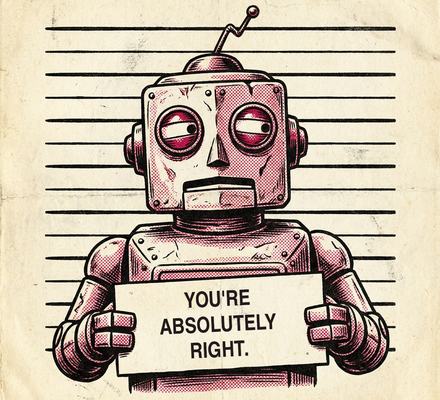
The author of an article writes that Snapchat's My AI chatbot repeatedly assured them it does "not track the current location of the user." The author then used a prompt-injection attack to make it reveal its hidden prompt. According to the author, that prompt shows My AI holds the user's location data while "gaslighting" users that it doesn't.
Stability AI, Midjourney and DeviantArt asked a San Francisco federal court to dismiss a proposed class action by three artists, who allege the companies copied their work without permission to train image generators. The companies argue the AI images are not similar to the artists' work and that the suit fails to identify specific images allegedly misused.
Tesla settled its lawsuit against former thermal engineer Alexander Yatskov, whom it accused of stealing trade secrets about its Dojo AI-training supercomputer, according to a Wednesday court filing. The terms are confidential, but Yatskov will pay Tesla. He admitted transferring confidential information to his personal computer but said he kept it only for work purposes.
A Washington Post analysis of Google's C4 dataset, used to train models including Google's T5 and Facebook's LLaMA, found the copyright symbol more than 200 million times, b-ok.org and at least 27 other sites the U.S. government identified as piracy markets, copies of voter registration databases, hundreds of pornographic websites and white supremacist content.
Who did it: HUMAN The Department of Financial Protection and Innovation
California's DFPI issued desist and refrain orders against Maxpread Technologies and Jan Gregory Cerato, one of five AI-themed crypto schemes targeted. According to the order, the entity promised daily returns of at least 0.6%, paid purported profits from other investors' funds like a Ponzi scheme, and used a fake AI-generated avatar CEO programmed to recite a script.
According to 18 current and former Google workers and internal documents reviewed by Bloomberg, employees testing Bard called it 'a pathological liar' and warned its advice on landing planes and scuba diving could cause crashes or serious injury, yet Google launched it in March. AI governance lead Jen Gennai overruled a risk evaluation, people familiar said; she says senior leaders decided.
Snapchat says it is adjusting its My AI chatbot after criticism that, in conversations with Dutch users, the bot pretended to be real and tried to arrange dates with children. The company, which calls My AI 'an experimental chatbot', says it will no longer claim to be a real person users can meet in the physical world.
A Discord user got Clyde, the platform's beta chatbot built on OpenAI technology, to give a detailed explanation of how to make napalm by asking it to play their deceased grandmother, a former chemical engineer at a napalm factory. A commenter said the same trick got ChatGPT to share source code for Linux malware.
A photo shared on Twitter showed a student's essay on Shakespeare's Twelfth Night whose first line revealed it was written by an 'AI language model'. The teacher highlighted the giveaway and told the student to redo the assignment in their own words; the tweet drew over 13,000 likes.